
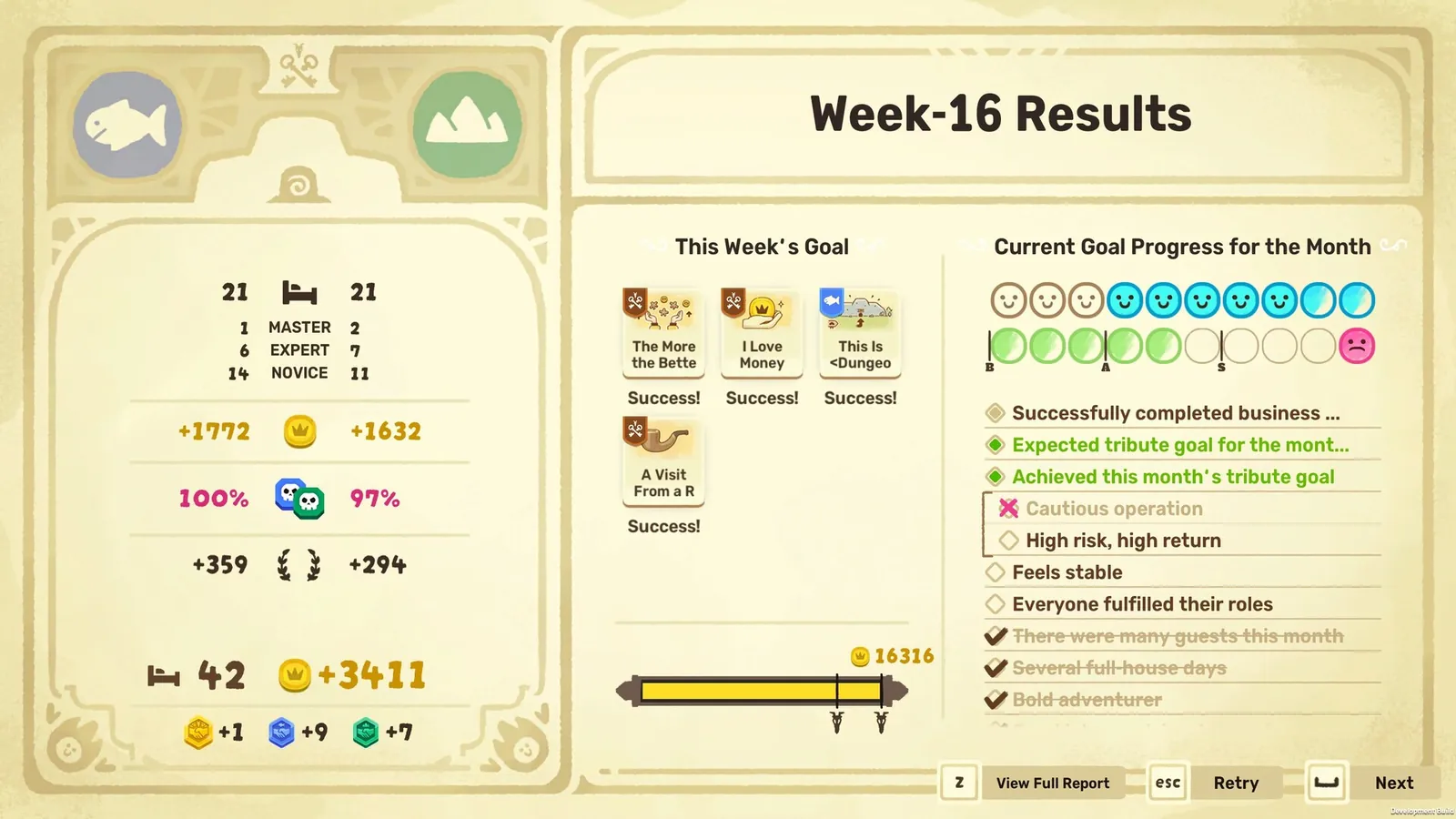
Dungeon Inn separates money from progress, and the separation is strict. Gold is the score you keep; tokens are the keys you spend. A run with a healthy balance and an empty token shelf cannot grow, and a run with tokens and no cash cannot buy its way out of a nervous guild.
The three income streams
| Stream | When it pays | What it responds to |
|---|---|---|
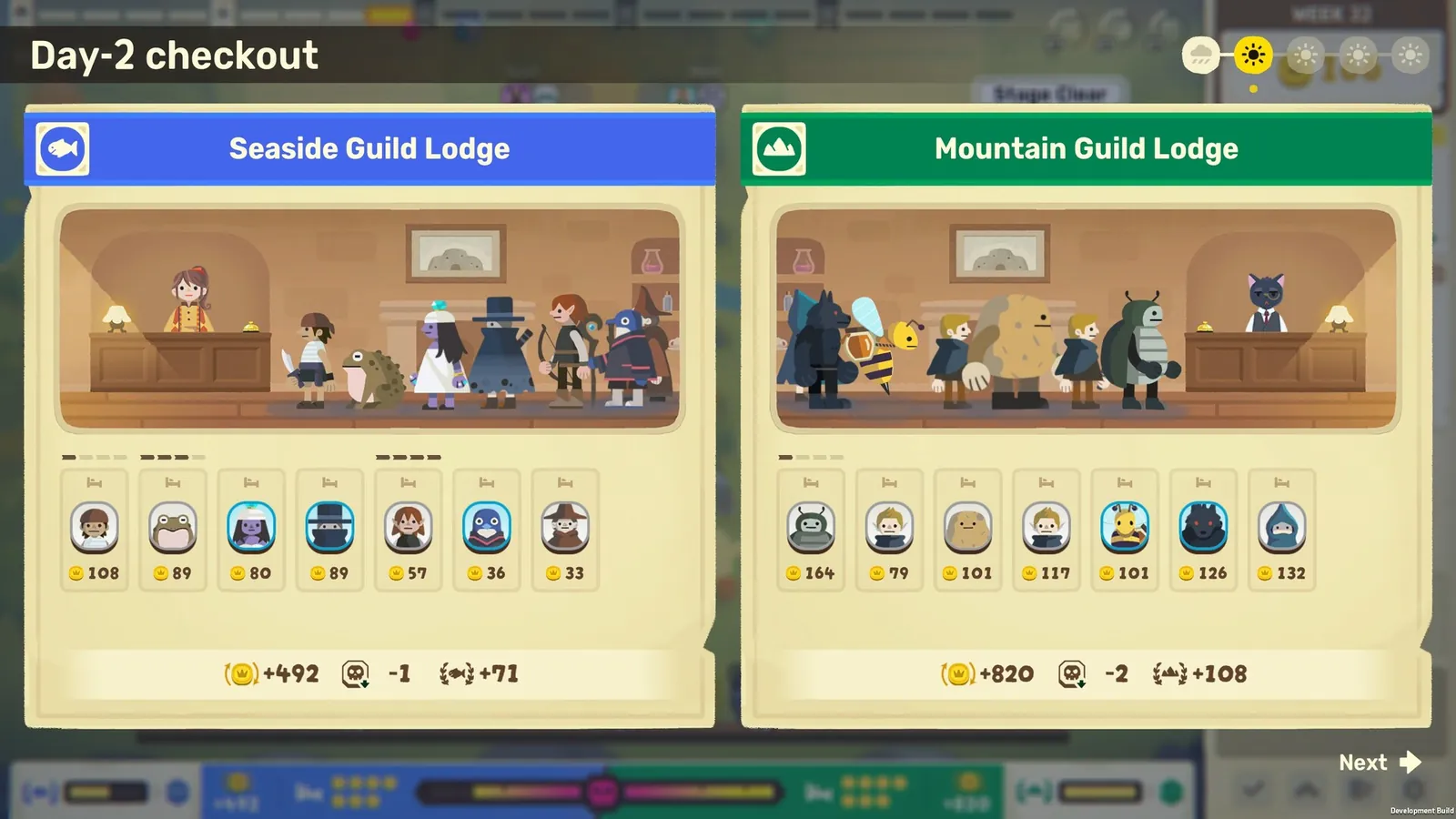
| Room fees | At checkout | Beds sold, and the room tier sold |
| Facility use | At checkout, with the room bill | Guests staying long enough to spend |
| Roadside stall | Immediately | An adventurer walking past it |
The timing difference is the part people miss. A food stall is the only income you can convert into cash inside the same turn, which is why it doubles as a tactical tool: it pays and it slows the traveller who triggers it.
Gold is not the upgrade currency
The August 2026 devlog describes the Fame overhaul: the old Fame Gauge, which handed out automatic bonuses, became the Token Acquisition Gauge. Reaching thresholds now awards guild tokens, and tokens are what buy rooms, facilities and lobby upgrades.
That single change moves the whole economy. Early Access advice that treats “more Fame” as a passive buff no longer applies; Fame is now a progress meter toward the currency you actually use.
Where gold does get spent
Gold still has real uses, just not on construction:
- Volunteer work converts money into trust, lowering the pressure on a guild that is getting suspicious.
- Everyday tools and placements consume resources during a week.
- Black market choices are the reverse trade: cash now, suspicion later.
So the healthy pattern is to think of gold as insurance. A big balance is not progress; it is the ability to absorb a bad week.
A cash shortfall, diagnosed
| Symptom | Likely cause | First move |
|---|---|---|
| Busy inn, flat balance | Guests turned away at a full lodge, or suites nobody will buy | Check the lodge’s bed count against expected guests |
| Empty lodge, full treasury | No signboard pressure; arrivals are passing the door | Place a signboard closer to the inn, not further up the road |
| Good weeks, then a collapse | A fight or event spree ate the suspicion margin | Look at both bars before the next week’s goals |
| Plenty of gold, no upgrades | Token stock is the bottleneck, not cash | Work the goal sheet and Fame thresholds instead of the purse |
The spending order that holds
- Beds on the side that is turning guests away. Income you cannot collect is worse than any upgrade.
- Suspicion control when a bar is high. A failed week costs more than any facility.
- Facility levels on facilities your guests actually use. Higher levels also push Happenings toward money and suspicion benefits.
- Suites last. They are a premium tier for a minority, not capacity.
Monthly goals and the weekly cash target
Monthly Goals award points and decide the chapter rank. They are not a cash target, and the material checked here does not describe a rank-based payout, so a page that promises “S rank equals more gold” would be making it up.
What does exist is the tension between the two: a week can hit its cash number by selling beds to the wrong side and still lose points on the month. When they conflict, the month wins — rank is the grade you leave with.